linda@xydishrack.com
+86-13431729140
86-750-6338203

The “best” kind of dish drying rack is the one that matches how your kitchen actually works: how many dishes you wash per cycle, how much counter space you can spare, whether you want drying to happen over the sink, and how strict you need to be about rust resistance and long-term stability. From a manufacturing perspective, the best rack is not defined by a single style, but by a clear set of performance targets: predictable drainage, stable loading, easy cleaning, and a finish that stays consistent under daily moisture and detergents.
At XIANGYU, we build dish drying racks as functional storage systems rather than simple wire frames, covering Iron Dish Racks, Aluminum Dish Racks, Stainless Steel Dish Racks, plus space-saving formats like roll-up racks, over-the-sink racks, foldable racks, and expandable drainers. :contentReference[oaicite:0]{index=0} That product breadth matters because the right answer changes by kitchen layout and user habit, even when the goal is the same: faster drying with a cleaner countertop.
A single-tier rack is often the most practical “default” choice when you wash smaller batches or want a low-profile setup. It keeps dishes within easy reach, simplifies wiping around the rack, and reduces the risk of top-heavy loading. If your priorities are quick access, easy cleaning, and a tidy look, single-tier is usually the best baseline category, especially in compact kitchens.
If you regularly dry plates, bowls, cups, and utensils together, a tiered rack becomes the best kind because it adds vertical capacity without expanding the footprint. Multi-tier formats are designed to separate categories—plates up top, bowls below, accessories on the side—so airflow improves and items are less likely to trap moisture between stacked surfaces. XIANGYU’s catalog includes detachable tiered options designed to make cleaning and reconfiguration easier. :contentReference[oaicite:1]{index=1}
When counter space is the main constraint, an over-the-sink rack can be the best kind because it relocates drying directly above the basin. That means water drips where it should—into the sink—reducing the need for a large countertop tray and cutting down on puddles around the rack. In addition, suspended placement typically improves airflow around dishes, which supports faster drying and fewer water spots. :contentReference[oaicite:2]{index=2}
For kitchens that need flexibility, a roll-up rack can be the best kind because it disappears when not in use. It works well for quick drying, rinsed produce, or as a temporary resting surface over the sink. The key is a stable rod structure and a surface that tolerates frequent wet/dry cycles without deforming. XIANGYU offers roll-up dish rack formats designed specifically for space optimization. :contentReference[oaicite:3]{index=3}
Foldable racks are ideal when you want full-size capacity occasionally but prefer a compact footprint most days. Expandable drainers suit households that alternate between light and heavy wash loads, because the rack can scale without requiring a second drying station. XIANGYU’s product range includes both foldable and expandable styles, allowing you to choose the space behavior you need rather than forcing your workflow to fit one fixed size. :contentReference[oaicite:4]{index=4}
Material is not only about appearance—it affects corrosion risk, rigidity, and how the rack behaves under load. XIANGYU focuses on three main material families: chrome plated iron, stainless steel, and aluminum. :contentReference[oaicite:5]{index=5}
Chrome plated iron is a strong value option when plating quality is controlled and the structure is designed for stability. It’s commonly selected for its stiffness and clean look, especially for single and multi-tier frames.
Stainless steel is often the best kind of choice when corrosion resistance is your top priority and the rack will stay wet frequently. It also supports a premium feel for long-term use.
Aluminum is often chosen for balanced weight and corrosion behavior, especially when surface oxidation treatment is applied to improve durability.
Below is a practical selection guide you can use to evaluate any rack category:
| What to check | Why it matters | What a good solution looks like |
|---|---|---|
| Drainage path | Standing water creates spots and odor | Water routes cleanly to sink or tray without pooling |
| Stability under load | Prevents tipping and bending | Wide support points, balanced tiers, rigid frame |
| Cleaning effort | Determines real-world usability | Detachable parts, accessible corners, wipe-friendly surfaces |
| Finish durability | Keeps appearance consistent | Controlled plating/oxidation, corrosion resistance under daily moisture |
| Accessory zoning | Reduces clutter | Dedicated spaces for plates, bowls, cups, utensils |
If you only remember one rule: the best kind of dish drying rack is the one that keeps airflow high and water out of the “dead zones” where moisture lingers. That single principle explains why tiered racks, over-sink racks, and well-designed tray systems outperform random flat frames in daily use.
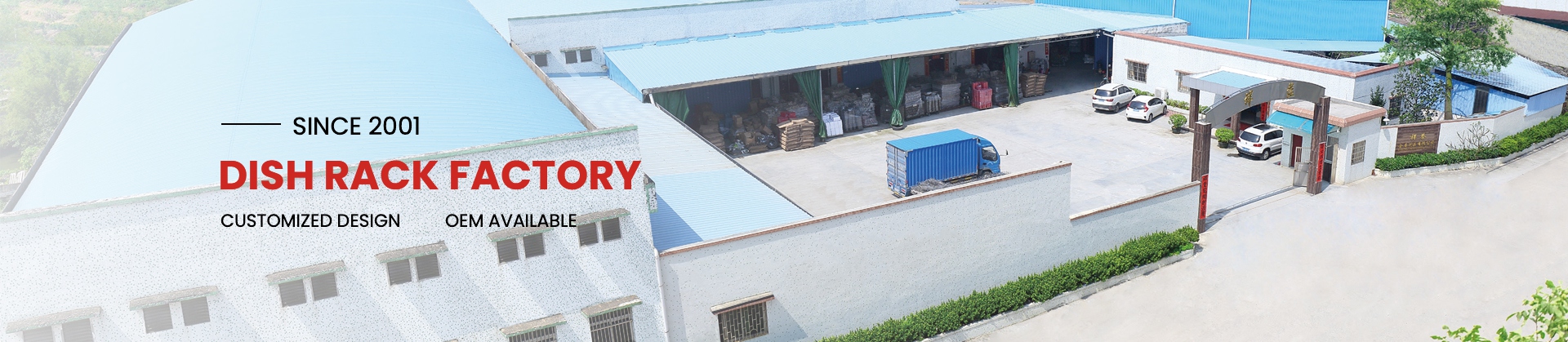
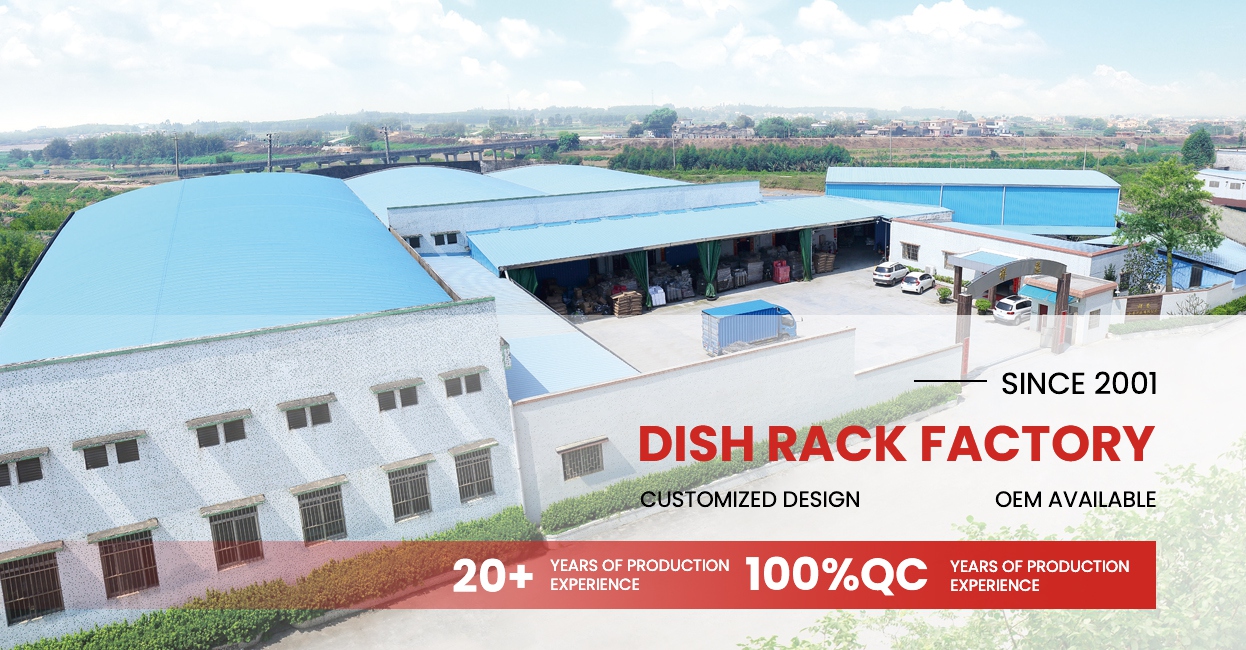
Choosing the “best” rack also depends on whether the manufacturer can deliver consistent structure, stable finishing, and repeatable packaging—especially when you need multiple SKUs across a product line. XIANGYU is a specialized dish rack manufacturer established in 2001 and located in Jiangmen, a major hardware production area, with a product system that spans iron, aluminum, and stainless steel racks across many formats. :contentReference[oaicite:6]{index=6}
From a supply standpoint, XIANGYU supports customized logo and defined production lead times on selected models, making it straightforward to align rack configurations, packaging, and assortment planning for wholesale and OEM/ODM programs. :contentReference[oaicite:7]{index=7} The result is a clearer path from product concept to stable, repeatable delivery—without having to compromise on rack types or capacity options.
Small counter, daily light washing: single-tier countertop rack or narrow rack format
Family use, mixed items per wash: two-tier rack with detachable components
Minimal counter clutter: over-the-sink rack
Need storage when not in use: roll-up rack or foldable rack
Variable load size: expandable drainer
There isn’t one universal “best” kind of dish drying rack. The best choice is the one that matches your space and washing rhythm while delivering stable drainage, strong loading, easy maintenance, and finish durability. With XIANGYU’s full category coverage—from countertop tiers to over-sink, roll-up, foldable, and expandable designs—you can select a rack style based on real kitchen constraints and still keep your lineup consistent in structure and supply.