judy@xydishrack.com
+86-13431729140
86-750-6338203

Market competition in kitchen storage products has shifted from basic utility to value-driven differentiation. dish racks are no longer judged only by capacity or price. Buyers now evaluate durability, user experience, aesthetics, and long-term reliability as part of product selection. In this context, upgrading dish rack features is the most direct way to increase product competitiveness and strengthen positioning in global distribution channels.
For manufacturers, the challenge is to combine structural performance with practical usability while keeping production efficiency under control. A successful product is not defined by one standout feature, but by a system of improvements that work together.
Material selection remains the foundation of product value. Among all options, the Stainless Steel Dish Rack continues to hold a strong position due to its corrosion resistance, strength, and long service life. According to worldstainless, global stainless steel production exceeded 64 million tonnes in 2025, reflecting its widespread use in durable consumer goods.
Durability directly affects long-term cost performance. A rack that maintains structural integrity and surface condition over time reduces replacement frequency and enhances user trust. For manufacturers, investing in high-quality raw materials and controlled surface finishing processes helps build a more competitive product line.
A modern dish rack must do more than hold plates. The evolution of kitchen rack function focuses on improving workflow, organization, and convenience in everyday use.
Key functional upgrades include:
Multi-zone storage for plates, bowls, utensils, and cups
Adjustable compartments to accommodate different sizes
Detachable components for flexible configuration
Integrated holders for cutting boards or knives
These features increase usability without significantly increasing footprint. A well-balanced modern dish rack transforms from a passive storage tool into an active part of kitchen organization.
Water management is one of the most critical aspects of dish rack design. Poor drainage leads to water accumulation, which can affect hygiene and reduce product lifespan.
Advanced drainage systems include:
Sloped drip trays for controlled water flow
Rotatable or extendable spouts for directional drainage
Elevated structures to improve airflow and drying speed
Studies on kitchen hygiene show that faster drying reduces the risk of bacterial growth, making drainage design a key component of high value dish rack features. Manufacturers that optimize this function can significantly enhance product perception.
Urban living trends continue to drive demand for space-efficient products. According to United Nations data, urban population is expected to reach nearly 68 percent of the global population by 2050, increasing pressure on residential space.
As a result, innovative dish rack design often focuses on:
Vertical stacking to maximize height usage
Foldable or collapsible structures
Expandable frames for adjustable width
These improvements allow dish racks to fit into a wider range of kitchen layouts while maintaining functionality. Compact design combined with usability is now a core factor in product competitiveness.
Appearance has become an important factor in purchasing decisions. Modern consumers expect kitchen products to match interior design styles while maintaining performance.
Common surface treatments include:
Matte or brushed finishes for a premium look
Powder coating for color customization
Anti-fingerprint surfaces for easier maintenance
A visually refined modern dish rack enhances perceived value and supports premium positioning in retail and e-commerce channels. Consistent finishing quality across batches also reflects the manufacturing capability behind the product.
Flexibility is a growing requirement in global markets. Different regions and sales channels demand variations in size, color, and configuration.
Modular design supports:
Easy adaptation to different market standards
Simplified packaging and transportation
Efficient assembly and disassembly
For manufacturers, this approach aligns with broader kitchen innovation trends, where products are designed to evolve with changing user needs. Customization capability also strengthens long-term cooperation by allowing product lines to expand without redesigning the entire structure.
Feature upgrades only create value when they are delivered consistently across large volumes. Variations in welding, coating, or assembly can reduce the effectiveness of even the best design.
Reliable production requires:
Standardized manufacturing processes
Batch-level quality inspection
Stable supply of raw materials
Controlled lead time management
Industry data from ISO shows that over one million companies worldwide adopt ISO 9001 systems, highlighting the importance of structured quality management. For dish racks, consistent execution ensures that upgraded dish rack features translate into real market value.
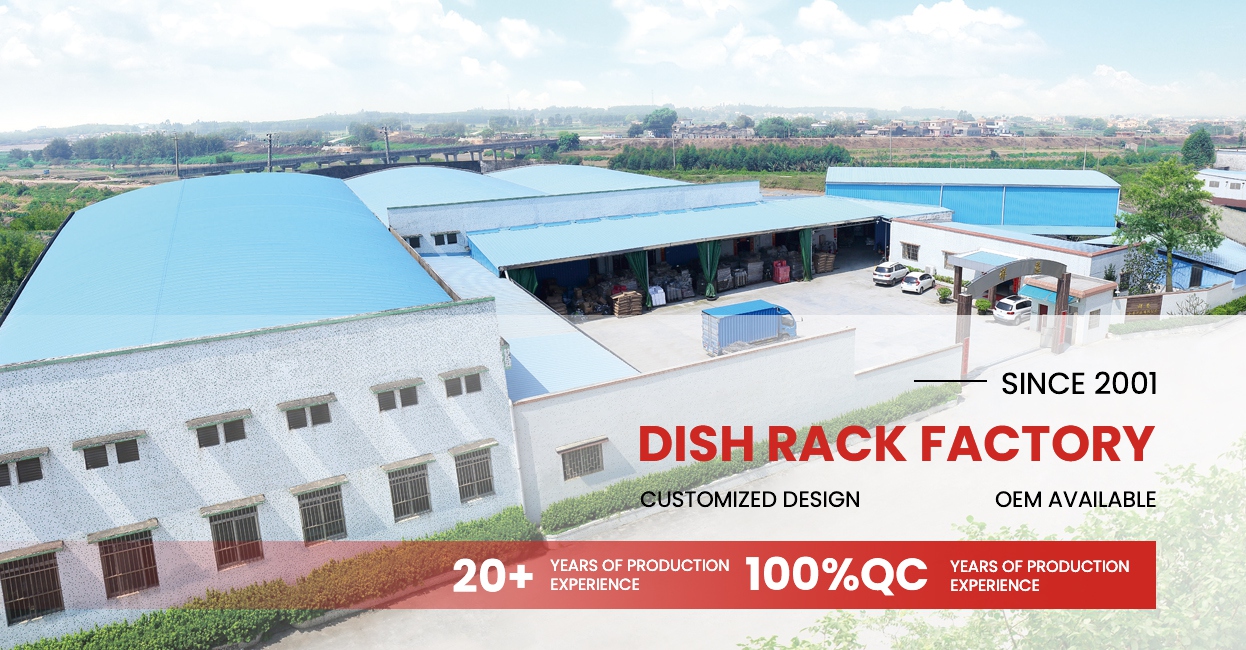
XIANGYU integrates functional design, material control, and production efficiency to develop competitive dish rack products. Its product portfolio includes stainless steel, coated metal, and aluminum structures, allowing flexibility in meeting different market demands.
By focusing on durability, practical functionality, and consistent manufacturing, XIANGYU builds products that align with evolving kitchen rack function expectations. The company also supports customization, enabling product adaptation across different regions and sales channels.
This combination of structured production and continuous improvement helps deliver high value dish rack features while maintaining stable supply, supporting long-term competitiveness in the global kitchenware market.
Dish rack competitiveness is shaped by a combination of durability, functionality, design, and manufacturing reliability. From material upgrades to drainage optimization and modular design, each improvement contributes to overall product value.
Manufacturers that align product development with real usage needs and maintain consistent production quality are better positioned to succeed in a market where kitchen innovation continues to redefine expectations.