judy@xydishrack.com
+86-13431729140
86-750-6338203

Material choice has a direct impact on how a dish rack looks, drains, resists moisture, supports weight, and performs in daily kitchen use. For buyers planning bulk dish rack procurement, the right material is not only a cost decision. It also affects shipping weight, retail positioning, return risk, surface durability, and long-term customer satisfaction.
Common dish rack materials include stainless steel, aluminum, chrome-plated iron, and plastic combinations. Each material has its own market value, but for lightweight kitchen storage products, the Aluminum Dish Rack is becoming a strong choice because it balances corrosion resistance, clean appearance, manageable cost, and easier handling during packing and transportation.
Dish racks are exposed to water almost every day. Plates, bowls, cups, and cutlery are often placed on the rack while still wet, so the frame material must handle moisture, friction, cleaning, and repeated loading. A poor material choice may cause rust spots, coating peeling, bending, surface stains, or unstable structure.
According to ASM International material data, aluminum has a density of about 2.7 g/cm³, while stainless steel is usually around 7.8 g/cm³. This shows why aluminum products are much lighter than steel products under similar structural designs. For dish racks, lighter weight helps reduce carton pressure, improves handling efficiency, and supports better shipping cost control.
A Stainless Steel Dish Rack is still a good option for markets that focus on premium appearance and high corrosion resistance. However, it usually has a higher material cost and heavier finished weight. Chrome-plated iron can be cost-effective, but the quality depends heavily on plating thickness, welding control, and surface protection. For many kitchen storage programs, an aluminum structure provides a more balanced solution.
| Material | Approximate Density | Main Advantage | Key Risk | Suitable Product Position |
|---|---|---|---|---|
| Aluminum | 2.7 g/cm³ | Lightweight, moisture-resistant, clean modern look | Needs good surface control to avoid scratches | Mid-range and modern kitchen storage |
| Stainless steel | 7.8 g/cm³ | Strong corrosion resistance, premium feel | Higher weight and higher cost | Premium countertop dish rack |
| Chrome-plated iron | 7.8 g/cm³ | Strong structure and competitive price | Rust risk if plating is damaged | Price-sensitive wholesale channels |
| Plastic parts | 0.9 to 1.4 g/cm³ | Flexible shape, lower weight | Lower heat and load resistance | Trays, feet, holders, accessories |
The density figures are based on commonly published engineering material references from ASM International and general metal material handbooks. Actual finished product weight also depends on wire diameter, frame thickness, tray design, and accessory structure.
The aluminum dish rack is especially suitable for buyers who want a product that looks cleaner than basic iron racks while staying lighter than stainless steel. Aluminum naturally forms a thin oxide layer on the surface when exposed to air, which improves its resistance to moisture. This feature makes it suitable for a rust resistant dish drying rack used in wet kitchen environments.
For countertop products, lighter weight is not a weakness when the structure is designed correctly. A stable aluminum dish rack can still support plates, bowls, cups, and utensils through proper frame thickness, balanced tier spacing, reinforced corners, and anti-slip feet. The key is not simply choosing aluminum, but choosing a manufacturer that understands how to turn aluminum into a stable kitchen storage product.
XIANGYU focuses on aluminum dish racks, stainless steel dish drainers, chrome-plated Iron Dish Racks, roll-up racks, foldable racks, and over-the-sink racks. This product range helps buyers match different price levels and market channels while keeping sourcing more efficient.
A stainless steel dish rack works well when the target market values a heavier feel, metallic appearance, and premium positioning. It is suitable for higher-end kitchenware collections, especially when the product needs a polished look and strong corrosion performance.
However, stainless steel is not always the best choice for every order. Heavier weight may increase logistics cost, and higher material cost may reduce price flexibility. For markets that need a clean appearance, good moisture resistance, and practical retail pricing, aluminum can be easier to balance.
Before choosing a material, buyers should look beyond the product name. A good dish rack manufacturer should provide clear details on frame thickness, tray material, surface finish, accessory structure, packing method, and inspection process.
For aluminum dish racks, several details are especially important:
Surface should be smooth, clean, and free from obvious scratches.
Frame structure should remain stable after assembly.
Drain tray should guide water smoothly without leakage.
Utensil holders and cup holders should be firmly fitted.
Anti-slip feet should protect the countertop and improve balance.
Carton packing should prevent rubbing during long-distance shipping.
These details are closely connected to final market feedback. A lightweight product still needs strong design control, especially for 2-tier and large-capacity racks.
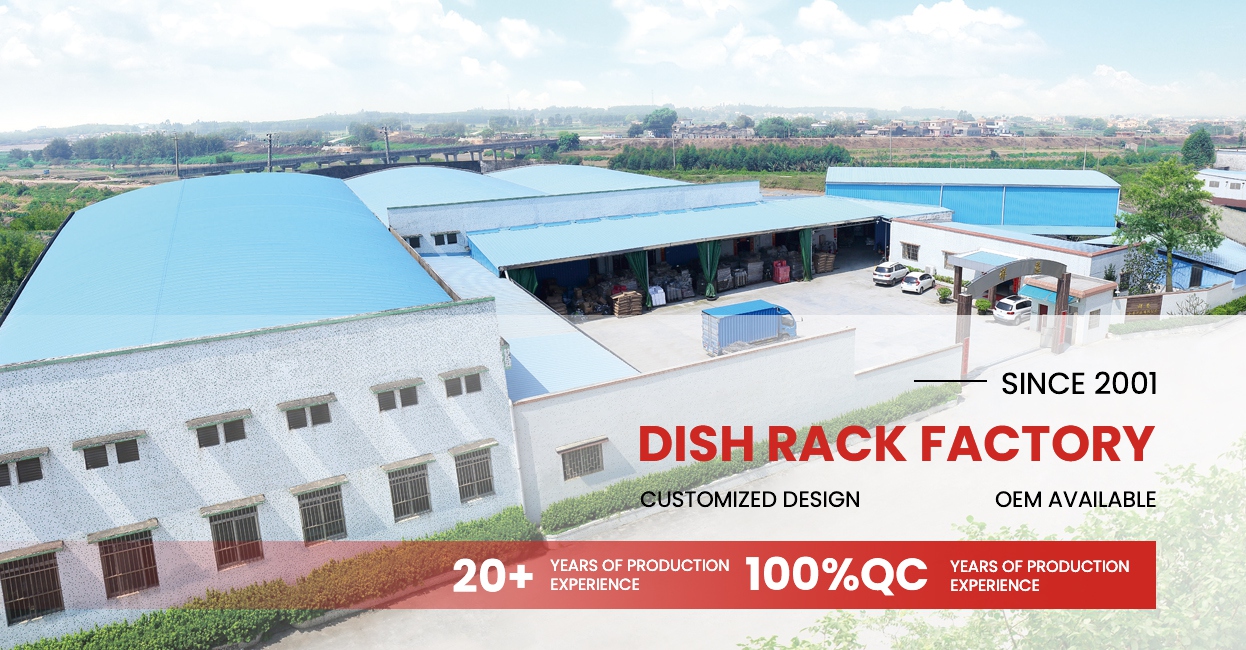
XIANGYU has long-term experience in kitchen storage manufacturing and offers OEM support for different dish rack materials, structures, sizes, colors, and packaging needs. For buyers comparing material options, XIANGYU can help evaluate whether aluminum, stainless steel, or chrome-plated iron is more suitable for the target price range and usage scenario.
For aluminum dish rack development, XIANGYU’s advantage is not only material supply. It also comes from product structure planning, surface treatment control, stable production capacity, and practical packaging experience. This helps buyers reduce quality uncertainty before placing larger orders.
The best material for dish racks depends on market positioning, cost target, product weight, corrosion resistance, and expected shelf appeal. Stainless steel offers a premium feel, chrome-plated iron supports competitive pricing, and plastic works well for accessories. For many modern kitchen storage collections, aluminum delivers the most balanced value through light weight, moisture resistance, clean appearance, and better logistics efficiency.
XIANGYU’s aluminum dish rack line gives buyers a practical way to develop durable, attractive, and market-ready dish drying products with stable factory support.