judy@xydishrack.com
+86-13431729140
86-750-6338203

Stable supply is rarely the result of a single large workshop or a low price offer. It comes from a production system that can keep material flow, output rhythm, and delivery planning under control even when demand changes. For a kitchen storage category like dish racks, supply stability matters because buyers often work with repeated replenishment, seasonal promotions, and multi-model orders. When one shipment is delayed, the effect can spread to warehouse planning, retail launch timing, and customer satisfaction. That is why choosing a dish rack manufacturer should start with production strength and supply chain discipline, not only with unit cost.
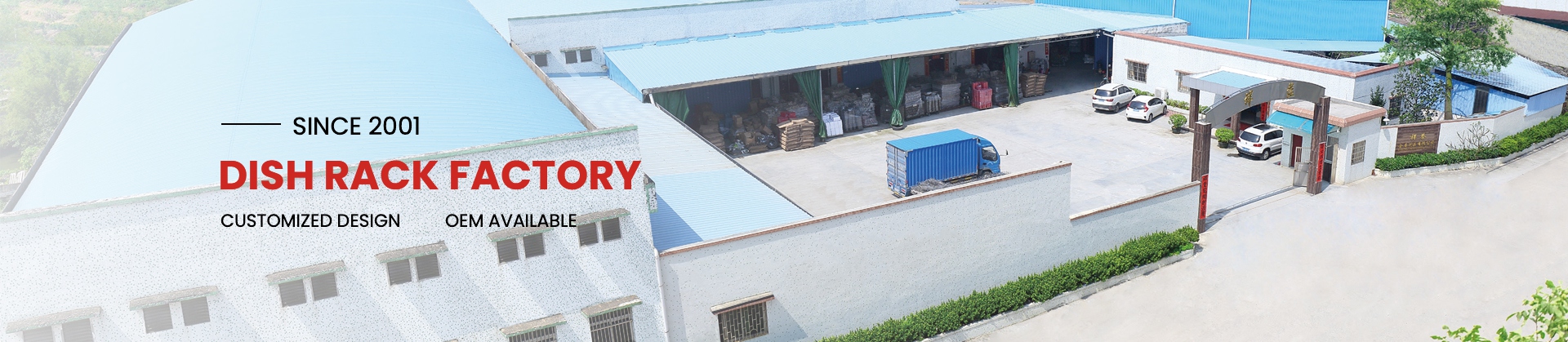
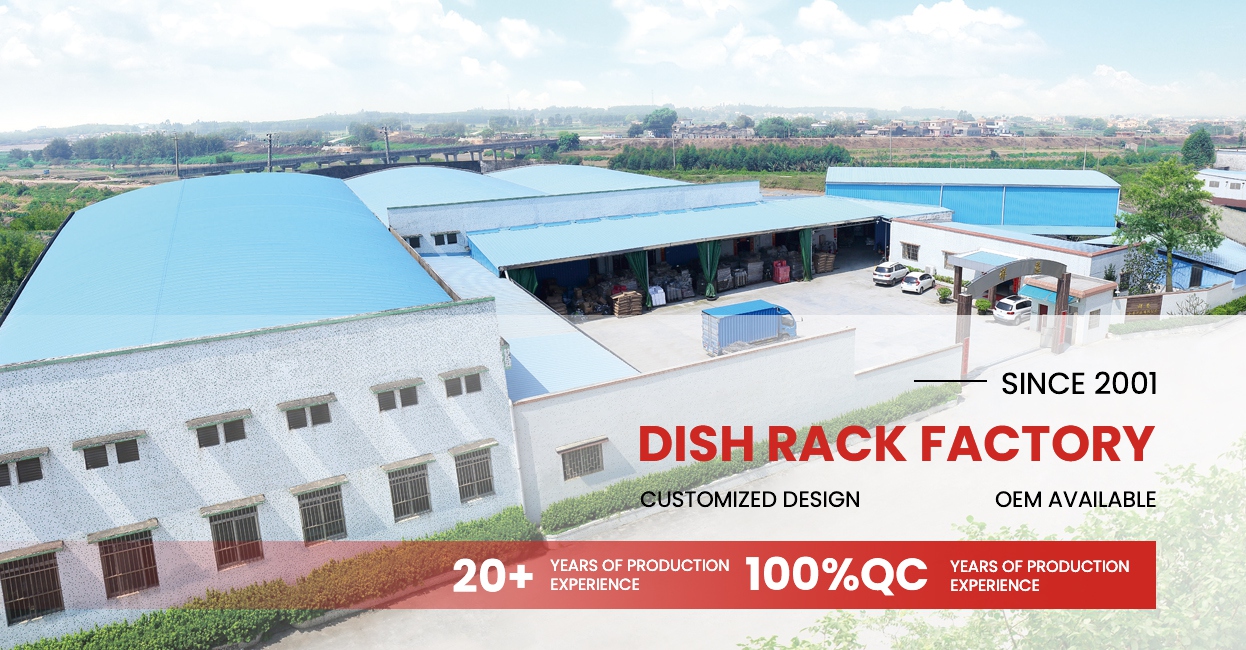
XIANGYU presents several signals that matter in this evaluation. Its website shows a broad dish rack range covering aluminum, iron chrome plated, and stainless steel models, with OEM support and strict quality management. The company is located in Siqian Town, Xinhui District, Jiangmen, a hardware production area that helps shorten coordination distance between factory operations and surrounding processing resources. Its published company information also points to more than 120 products, a 6,000 square meter factory, more than 100 employees, and annual turnover above USD 10 million. These factors do not guarantee every order will be easy, but they do show the structure of a stable dish rack supplier rather than a trader depending on scattered outsourcing.
When discussing production capacity rack, factory supply, the real question is not how many units can be produced in one good month. The better question is whether output remains predictable across normal months, peak months, and mixed orders. A reliable factory needs line balance between cutting, bending, welding, polishing, surface finishing, assembly, and packing. If one process slows down, the whole delivery plan shifts. Stable supply therefore depends on workflow design, not just labor headcount. This is especially important for dish racks because orders often include different tiers, tray types, finishes, and carton requirements in the same booking.
A factory with broad internal capability is usually better prepared for this challenge. XIANGYU’s product range includes single-tier, double-tier, foldable, narrow, detachable, and aluminum series, which suggests experience in handling structural variation instead of repeating one standard item only. For overseas buyers, that matters because stable supply often requires one supplier to support both core volume models and new derivative items. A high capacity dish rack factory is not simply a place with large numbers. It is a place where production scheduling can absorb SKU complexity without losing delivery control.
Dish rack production depends heavily on material availability and processing consistency. Steel and stainless steel remain important worldwide. According to the World Steel Association, global steel production has stayed broadly stable since 2020, while worldstainless reported 64.2 million tonnes of stainless steel melt shop production in 2025, up 2.1 percent year on year. The International Aluminium Institute also tracks continued high primary aluminium output worldwide. For dish rack factories, this means the upstream metal base remains active, but it also means purchasing strategy is essential because price movement and lead time pressure can still affect smaller suppliers.
This is one reason the aluminum frame dish rack category has gained attention. Aluminum offers a useful balance of lower weight, clean appearance, and corrosion resistance for modern kitchen storage. XIANGYU has built a dedicated Aluminum Dish Rack line on its website, which shows that it is not limited to one material path. For buyers, multi-material capability reduces sourcing risk. If one material becomes more volatile, a supplier with stronger engineering and sourcing flexibility can guide product adjustment instead of simply delaying the order. That flexibility is a practical advantage from a true manufacturing supplier.
Strong factories do not treat purchasing and production as separate departments. Raw material booking, accessory inventory, packaging readiness, and assembly planning need to move together. Official data from China’s National Bureau of Statistics showed the manufacturing PMI reached 50.4 in March 2026, returning to expansion territory. UNIDO also reported resilient global manufacturing output in late 2025 and early 2026. That overall environment supports production continuity, but factory-level results still depend on internal coordination. Buyers should therefore look for suppliers that can confirm material preparation, order queue visibility, and production milestones before mass production starts.
For dish rack projects, supply chain management usually comes down to five control points:
| Control point | Why it matters for stable supply |
|---|---|
| Raw material booking | Reduces risk of last-minute material shortage |
| Shared BOM review | Prevents mismatch between structure, finish, and accessories |
| Rolling production schedule | Helps mixed orders move without blocking core models |
| Packaging readiness | Avoids finished goods waiting for cartons or labels |
| QC before shipment | Reduces rework and shipment delay |
This type of control is especially useful for OEM business, where logo, finish, packaging, and configuration can all change from one order to another. XIANGYU states that OEM is available, so stable execution depends on translating customized requirements into a controlled production sequence early in the order cycle.
Supply stability becomes more credible when factory profile, product breadth, and process discipline support each other. XIANGYU’s location in a hardware manufacturing cluster, its multi-material rack range, and its published factory scale all point to a structure built for continuity rather than opportunistic trading. For buyers comparing suppliers, this matters because the safest partner is often the one that can keep consistent output across repeat orders, not the one that only offers an attractive first quotation.
The best way to ensure stable dish rack supply is to work with a supplier that understands capacity planning, material strategy, and order coordination as one system. That is where a qualified dish rack manufacturer creates real value. XIANGYU’s broad category coverage, OEM capability, and factory-based operation make it better positioned to support long-term supply planning, whether the focus is standard models, customized programs, or a growing factory supply partnership built on dependable delivery.